Do you ever find yourself torn between drawing nearer to God and clinging to a self-destructive habit? You may have not noticed at first, but something or someone makes it clear that this is exactly what is happening. What do you do?
Theologically, we know that when we pick something before God, we are plunging into idolatry. It may seem like a petty, victimless crime, but God certainly does not see it that way. He will share his glory with no other.
Intellectually, we may recognize that the behavior that is pulling us away will eventually cost us dearly. However, we might assume, for the time being at least, we will escape the consequences.
Yet, in spite of what we know to be true, we are often pulled along by an emotional tug that defies understanding. It may well be the principle of sin that resides in our mortal bodies and wages war against our flesh.
We are left with a choice--God or our habit. It seems like such a simple choice, but I have witness several people exchange the glory of God for their destruction. Everyday the battle wages within me. Everyday I have to make the choice.
What about you? How do you handle the struggle?
Showing posts with label Obedience. Show all posts
Showing posts with label Obedience. Show all posts
Friday, October 12, 2012


Tuesday, September 18, 2012
Loving Jesus
How does Jesus define love?
"If anyone loves Me he will keep My word. My Father will love him, and We will come to him and make Our home with him. The one who doesn't love Me will not keep My words. The word that you hear is not Mine but is from the Father who sent Me" (John 14:23-24, HCSB).
It is easy to fall into the trap of seeing love a warm, fuzzy feelings. But love is more than that. Love is accepting a person for who they are. It's about meeting them on their terms. If I approach someone with from the standpoint of self-interest (what they can do for me), I'm not loving them. I may be attracted to them. I may feel pity for them. I may be genuinely concerned for them, but none of those things in love.
Jesus says, "Here I am. Love me." And we are to love him more than anything else. Why? Because he created us, and by his grace, he redeemed us. He is worthy of our utmost love. All of our life and desires should be prioritized beneath the Lord.
Yet, I find myself failing to keep his word, time and again. I struggle with some of the most basic things. I cling to him in faith. I am confident that his love is greater than mine, and greater than I can imagine. I try to remind myself of it often, not so I can do as I please, but so that I will be more apt to do as the Lord pleases.
How do we love Jesus? By trusting his promises, and pursing his will. May God bless you and keep you.
"If anyone loves Me he will keep My word. My Father will love him, and We will come to him and make Our home with him. The one who doesn't love Me will not keep My words. The word that you hear is not Mine but is from the Father who sent Me" (John 14:23-24, HCSB).
It is easy to fall into the trap of seeing love a warm, fuzzy feelings. But love is more than that. Love is accepting a person for who they are. It's about meeting them on their terms. If I approach someone with from the standpoint of self-interest (what they can do for me), I'm not loving them. I may be attracted to them. I may feel pity for them. I may be genuinely concerned for them, but none of those things in love.
Jesus says, "Here I am. Love me." And we are to love him more than anything else. Why? Because he created us, and by his grace, he redeemed us. He is worthy of our utmost love. All of our life and desires should be prioritized beneath the Lord.
Yet, I find myself failing to keep his word, time and again. I struggle with some of the most basic things. I cling to him in faith. I am confident that his love is greater than mine, and greater than I can imagine. I try to remind myself of it often, not so I can do as I please, but so that I will be more apt to do as the Lord pleases.
How do we love Jesus? By trusting his promises, and pursing his will. May God bless you and keep you.
Thursday, September 13, 2012
Get up! Get Right!
"The Lord then said to Joshua, "Stand up! Why are you on the ground? Israel has sinned. They have violated My covenant that I appointed for them. They have taken some of what was set apart. They have stolen, deceived, and put the things with their own belongings. This is why the Israelites cannot stand against their enemies. They will turn their backs and run from their enemies, because they have been set apart for destruction. I will no longer be with you unless you remove from you what is set apart" (Josh. 7:10-12, HCSB).
The natural human response to tragedy is to blame God. After the amazing victory at Jericho, Joshua should have deduced a problem when his men lost against the small village, Ai. Yet, Joshua blamed God. In essence, he said, "Why have you brought us here just to let us be defeated?"
Before I go any farther, I think I should make a few things clear. Every tragedy is a result of sin. However, that does not mean that every person who goes through tragedy is the cause of their own difficulty. Difficulty is not always (not even usually) the result of personal sin. But difficulty happens because of sin. Adam sinned and brought the human race into a fallen state. His sin impacted all of the created order, so that now creation groans for the appearing of Christ. All human beings, except Jesus, have been born with a sin nature. God is not the author of sin.
The sin of others affects us. Sometimes, difficulty is the result of someone's sin against us. For example, let's say I am driving down the road, in my lane, at the legal speed. All of the sudden, a drunk driver speeds through a red light and smashes into my car. Let's say that the experience paralyzes me. Should I assume that I did something wrong? Would the God who punished my sins in Christ, punish me in this way? I doubt it. The story of Job teaches us that not all who suffer are suffering because they have displeased God. Job pleased God very much. God permitted Job to suffer so that the world would know how pleased he was with Job.
Now back to our example. I'm in a wheel chair do to the sin of another (and not my own sin). Let's say the drunk driver is put in jail. Is he being punished for his sin? Yes, of course he is, but that doesn't mean he is beyond the reach of grace. However, that is a post for another day. What I want to point out is that just because one person suffers as a consequence of their sin that doesn't mean everyone who suffers is personally responsible.
Back to Joshua and Israel. Instead of accusing God, Joshua should have been asking why the defeat happened. Maybe he should have began by asking if he did something that cost his men, but considering his close relationship to the Lord, Joshua would have known if he was the problem. He would have immediately asked for forgiveness. He should have said, "God, what went wrong?"
Two more things should be pointed out. First, the sin of one Israelite had an affect on all the other Israelites. God's people were held accountable for the sin of one of their own. Second, God was more concerned with the sin of his people than of the nations. The nations that dwelt in Canaan were all under the judgment of God. Their sin had reached its full measure, but God permitted the Amorites to have victory over Israel because of Israel's sin.
What's the point? Judgment begins at the house of God. Those who know God are held to a higher standard. To whom much is given, much is required. Israel floundered in its forward advance because their was sin in the camp. Maybe the church is floundering today because there is sin in the camp. We don't practice church discipline much any more.
God is still holy. He still demands holiness of his people. The author of Hebrews tells us that without holiness no one will see the Lord (Heb. 12:14). We are called to live righteous lives. The church is called to maintain righteousness within the body. The enemies of Christ appear to be gain victory over the church in several places. It's tempting to believe that it is because the enemies possess greater power. Maybe it's because of the weakness of the Church. The Lord's solution for Joshua is our solution as well, "Get up! And get right!"
The natural human response to tragedy is to blame God. After the amazing victory at Jericho, Joshua should have deduced a problem when his men lost against the small village, Ai. Yet, Joshua blamed God. In essence, he said, "Why have you brought us here just to let us be defeated?"
Before I go any farther, I think I should make a few things clear. Every tragedy is a result of sin. However, that does not mean that every person who goes through tragedy is the cause of their own difficulty. Difficulty is not always (not even usually) the result of personal sin. But difficulty happens because of sin. Adam sinned and brought the human race into a fallen state. His sin impacted all of the created order, so that now creation groans for the appearing of Christ. All human beings, except Jesus, have been born with a sin nature. God is not the author of sin.
The sin of others affects us. Sometimes, difficulty is the result of someone's sin against us. For example, let's say I am driving down the road, in my lane, at the legal speed. All of the sudden, a drunk driver speeds through a red light and smashes into my car. Let's say that the experience paralyzes me. Should I assume that I did something wrong? Would the God who punished my sins in Christ, punish me in this way? I doubt it. The story of Job teaches us that not all who suffer are suffering because they have displeased God. Job pleased God very much. God permitted Job to suffer so that the world would know how pleased he was with Job.
Now back to our example. I'm in a wheel chair do to the sin of another (and not my own sin). Let's say the drunk driver is put in jail. Is he being punished for his sin? Yes, of course he is, but that doesn't mean he is beyond the reach of grace. However, that is a post for another day. What I want to point out is that just because one person suffers as a consequence of their sin that doesn't mean everyone who suffers is personally responsible.
Back to Joshua and Israel. Instead of accusing God, Joshua should have been asking why the defeat happened. Maybe he should have began by asking if he did something that cost his men, but considering his close relationship to the Lord, Joshua would have known if he was the problem. He would have immediately asked for forgiveness. He should have said, "God, what went wrong?"
Two more things should be pointed out. First, the sin of one Israelite had an affect on all the other Israelites. God's people were held accountable for the sin of one of their own. Second, God was more concerned with the sin of his people than of the nations. The nations that dwelt in Canaan were all under the judgment of God. Their sin had reached its full measure, but God permitted the Amorites to have victory over Israel because of Israel's sin.
What's the point? Judgment begins at the house of God. Those who know God are held to a higher standard. To whom much is given, much is required. Israel floundered in its forward advance because their was sin in the camp. Maybe the church is floundering today because there is sin in the camp. We don't practice church discipline much any more.
God is still holy. He still demands holiness of his people. The author of Hebrews tells us that without holiness no one will see the Lord (Heb. 12:14). We are called to live righteous lives. The church is called to maintain righteousness within the body. The enemies of Christ appear to be gain victory over the church in several places. It's tempting to believe that it is because the enemies possess greater power. Maybe it's because of the weakness of the Church. The Lord's solution for Joshua is our solution as well, "Get up! And get right!"
Friday, August 31, 2012
On Time
Time is a funny thing. I think it was Kermit the Frog who said, "Times fun when your having flies." Time can be wasted or saved. Time can be lost or found. Time can be managed (wisely or poorly). Time waits for no man, but heals all wounds. You can be on it or behind it. Time passes so slowly when your young or waiting for something or especially when you are young and waiting for something. I have heard it said, "The older you get, the faster time flies."
In a given day, if a person lives through from start to finish, we all get the same amount of it. We all get the same 24 hours, but we don't all use it the same way. Some people make the most of their time, while others kill time.
As followers of Christ, we are called to redeem the time. But what does that mean? It means we have to make the most our of every moment. We live, love, learn, and serve as if each moment might be our last. We must live out our time here with the full knowledge that at any moment we will be called to give an account of how we used our time.
The clock it ticking. Time is slipping away from us all. We can remember moments in our life, but we can't turn back time. God has given us this present moment live and move and breath in his glorious grace, but will we make the most of it?
In a given day, if a person lives through from start to finish, we all get the same amount of it. We all get the same 24 hours, but we don't all use it the same way. Some people make the most of their time, while others kill time.
As followers of Christ, we are called to redeem the time. But what does that mean? It means we have to make the most our of every moment. We live, love, learn, and serve as if each moment might be our last. We must live out our time here with the full knowledge that at any moment we will be called to give an account of how we used our time.
The clock it ticking. Time is slipping away from us all. We can remember moments in our life, but we can't turn back time. God has given us this present moment live and move and breath in his glorious grace, but will we make the most of it?
Thursday, August 30, 2012
Decisions, Decisions
How do you go about making decisions? Do you put the choices in a hat, shake it up, and pull one out? Or are you one of those decisive people who make lightning quick decisions? Maybe you like to pray about it awhile. But in the end, how do you know you made the right choice? Sometimes, I wish we still had the Urim and Thummim (Exodus 28:30).
Some choices are easier because they are morally neutral. Does it really matter if you get the steak or the chicken, the fish or the pork? Not unless you are drifting into gluttony by ordering all of them. Is there a moral difference between yellow and green? These decisions can be made with little or no fear because there is no moral nature to them.
Other decisions are easier to make because the Bible gives us clear, moral guidance. Somethings, like murder, are wrong and when presented with the temptation, we must refrain. Other things, like showing mercy, are always right, and should be practiced.
But other decisions are harder because there is not a clear moral directive. In situations like these, it pays to be familiar with the Bible's teaching on various subjects. We know showing mercy is always right, but what exactly should mercy look like. If we aren't careful, our acts of mercy might enable someone to slip into a habitual sin pattern like laziness or drunkenness. Sometimes mercy takes the form of tough love. The Word of God is our ultimate guide providing us with teachings and principles that should inform our decisions. A well informed conscience is a relatively reliable guide.
But how do you know if a decision was the right one? Some say "peace of mind." Some say "the greater good." There are many ways to measure, but not all of them are right. In truth, there isn't always a clear cut answer. You just have to trust that God will measure the intentions, and graciously work all things for his glory and your good.
Some choices are easier because they are morally neutral. Does it really matter if you get the steak or the chicken, the fish or the pork? Not unless you are drifting into gluttony by ordering all of them. Is there a moral difference between yellow and green? These decisions can be made with little or no fear because there is no moral nature to them.
Other decisions are easier to make because the Bible gives us clear, moral guidance. Somethings, like murder, are wrong and when presented with the temptation, we must refrain. Other things, like showing mercy, are always right, and should be practiced.
But other decisions are harder because there is not a clear moral directive. In situations like these, it pays to be familiar with the Bible's teaching on various subjects. We know showing mercy is always right, but what exactly should mercy look like. If we aren't careful, our acts of mercy might enable someone to slip into a habitual sin pattern like laziness or drunkenness. Sometimes mercy takes the form of tough love. The Word of God is our ultimate guide providing us with teachings and principles that should inform our decisions. A well informed conscience is a relatively reliable guide.
But how do you know if a decision was the right one? Some say "peace of mind." Some say "the greater good." There are many ways to measure, but not all of them are right. In truth, there isn't always a clear cut answer. You just have to trust that God will measure the intentions, and graciously work all things for his glory and your good.
Wednesday, March 21, 2012
The Confident Heart
Do you think you can pass any test? Are you confident? Where does you confidence come from? David was confident that he could pass the test. He saw himself on solid ground. Psalm 26 captures David's confidence.
In Psalm 26:1, David asks for vindication. He wants the Lord to show others that he was right to trust in the Lord. David calls himself blameless. What does it mean to be blameless? David can't mean sinless, because only Jesus Christ was sinless. He must me mean something else. He clarifies his statement with the words, "I have trusted the Lord without wavering." David's righteousness rested in his faith in the Lord.
More amazing than David's claims is his request for God to test him. To paraphrase, he says check me from top to bottom. David is asking for a test. Most of us shy away from tests, but not David. He knew that his heart was prone to sinfulness, why ask God to search him. David wanted to where error was so that he could repent of it.
David was confident that he could stand up under God's scrutiny. But why? David's confidence wasn't in himself, but the Lord. As we read through Psalm 26:3-8, David tells us the reasons for his confidence. He kept the Lord's love before him. Whether David meant God's love was an ever-present reality in his life or that he continued to meditate on the reality of God's love for him, David was mindful of God's love. David walked in the Lord's truth. The truth here refers to God's Word. Walking in the Word, lead David to lead a holy life. David's life also centered on sincere worship of the Lord.
David's confidence was the work of the Lord in his life. He could see how God was working in him, and he knew God would continue. To that end, David asked God to keep him. Psalm 26:9-11 records David's prayer. In essence, he says, "Don't throw me away with the bad people."
David rested in the knowledge of God's faithfulness. He knew the Lord delights in showing mercy, so David trust in the Lord. That trust gave David the confidence to face any test? Are you trusting the Lord?
In Psalm 26:1, David asks for vindication. He wants the Lord to show others that he was right to trust in the Lord. David calls himself blameless. What does it mean to be blameless? David can't mean sinless, because only Jesus Christ was sinless. He must me mean something else. He clarifies his statement with the words, "I have trusted the Lord without wavering." David's righteousness rested in his faith in the Lord.
More amazing than David's claims is his request for God to test him. To paraphrase, he says check me from top to bottom. David is asking for a test. Most of us shy away from tests, but not David. He knew that his heart was prone to sinfulness, why ask God to search him. David wanted to where error was so that he could repent of it.
David was confident that he could stand up under God's scrutiny. But why? David's confidence wasn't in himself, but the Lord. As we read through Psalm 26:3-8, David tells us the reasons for his confidence. He kept the Lord's love before him. Whether David meant God's love was an ever-present reality in his life or that he continued to meditate on the reality of God's love for him, David was mindful of God's love. David walked in the Lord's truth. The truth here refers to God's Word. Walking in the Word, lead David to lead a holy life. David's life also centered on sincere worship of the Lord.
David's confidence was the work of the Lord in his life. He could see how God was working in him, and he knew God would continue. To that end, David asked God to keep him. Psalm 26:9-11 records David's prayer. In essence, he says, "Don't throw me away with the bad people."
David rested in the knowledge of God's faithfulness. He knew the Lord delights in showing mercy, so David trust in the Lord. That trust gave David the confidence to face any test? Are you trusting the Lord?
Wednesday, February 15, 2012
A Brief Guide to Spiritual Warfare
What do you think about when you hear the expression, "Spiritual Warfare"? Typically, I think of demonic oppression and prayer. I know I should know better. Spiritual warfare is bigger than that. It is the spiritual conflict that underlies all human conflict.
Paul faced a lot of conflict. I wonder which conflicts he found the most disappointing. I think the conflict he faced with the church at Corinth would be one of his most trying. After patiently training them in the gospel they were still willing to reject him in favor of false teachers. It is a bit perplexing.
In 2 Corinthians 10:1-6, Paul addresses some of the accusations made against him, and defends his ministry. In doing so, he gives us a brief guide to spiritual warfare. He reminds us that we have divine power to tear down strongholds. Here are three rules to guide us:
Rule 1: Don't use the world's strategies. The world, or the powers that govern this world, use misdirection, pride, guilt, rage, etc. to fight God and his people. However, we are not to resort to those kind of tactics. Instead, we follow the example of Christ living in meekness and with patience. Meekness is not weakness. Patience is not cowardice. Spiritual conflict is all around us, but we can't adopt the world's way of waging war.
Rule 2: Don't use the world's weapons. What are the world's weapons? Violence, slander, lies, bribes, threats, self-promotion, etc. The world will use any means to accomplish the bad that it intends to do. However, we cannot do bad that good may come of it. We must use the weapons God has given us to combat our enemies. Those weapons include: the Truth, speaking the truth in love, the message of Christ, the knowledge of God, Scriptures, divine wisdom, prayer, humility, and holy conduct.
Rule 3: Don't let strongholds stand. What is a stronghold? It is a place of strength from which an enemy can strike. Going to bed angry can create a stronghold for the devil in our lives (see Eph. 4:25-28). Anything, even a church tradition, can become a stronghold if we aren't careful. To demolish strongholds, we must demolish every argument and pretense that sets itself in opposition to God. We need to take every thought captive, and make it obedient to Christ. And we need to be ready to act.
The battle rages around us, even if we don't see it. We need to join the battle, but we have to do it God's way and with the tools God has given.
Paul faced a lot of conflict. I wonder which conflicts he found the most disappointing. I think the conflict he faced with the church at Corinth would be one of his most trying. After patiently training them in the gospel they were still willing to reject him in favor of false teachers. It is a bit perplexing.
In 2 Corinthians 10:1-6, Paul addresses some of the accusations made against him, and defends his ministry. In doing so, he gives us a brief guide to spiritual warfare. He reminds us that we have divine power to tear down strongholds. Here are three rules to guide us:
Rule 1: Don't use the world's strategies. The world, or the powers that govern this world, use misdirection, pride, guilt, rage, etc. to fight God and his people. However, we are not to resort to those kind of tactics. Instead, we follow the example of Christ living in meekness and with patience. Meekness is not weakness. Patience is not cowardice. Spiritual conflict is all around us, but we can't adopt the world's way of waging war.
Rule 2: Don't use the world's weapons. What are the world's weapons? Violence, slander, lies, bribes, threats, self-promotion, etc. The world will use any means to accomplish the bad that it intends to do. However, we cannot do bad that good may come of it. We must use the weapons God has given us to combat our enemies. Those weapons include: the Truth, speaking the truth in love, the message of Christ, the knowledge of God, Scriptures, divine wisdom, prayer, humility, and holy conduct.
Rule 3: Don't let strongholds stand. What is a stronghold? It is a place of strength from which an enemy can strike. Going to bed angry can create a stronghold for the devil in our lives (see Eph. 4:25-28). Anything, even a church tradition, can become a stronghold if we aren't careful. To demolish strongholds, we must demolish every argument and pretense that sets itself in opposition to God. We need to take every thought captive, and make it obedient to Christ. And we need to be ready to act.
The battle rages around us, even if we don't see it. We need to join the battle, but we have to do it God's way and with the tools God has given.
Wednesday, December 28, 2011
Doers of the Word
Imagine you're on the edge of 2013, and you're looking back at 2012. What changes do you hope to see? What accomplishments do you hope to have? A lot of people don't like making New Year resolutions. Most of us are rarely successful at keeping them, so why make them.
I'm not so interested in getting people to make resolutions, rather I'm interested in why that make decisions to change. How do you make the decision? How does God's will affect your planning? Where do you turn for guidance?
At Monticello, the Word of God is our guidebook. The Holy Scriptures are our "authority in matters of faith and practice," and they "were given by the inspiration of God, and are the only sufficient, certain and authoritative rule of all saving knowledge, faith, and obedience."
We believe the Scriptures teach us all that we need to know about God, His will, and how we can be apart of it. The Bible teaches what to believe and how to act. Faith and practice go hand-in-hand.
James, a leader in the early church and brother to Jesus Christ, reminds us of this truth throughout his letter. In James 1:22-25, he urges us to be doers of the Word. Discipleship is more than mere profession. A true disciple is one who does what he has been taught to do.
If we are to be doers, we must search the Word diligently. We search the Word by reading (and rereading), studying, memorizing, and by seeking understanding. It has to be a continual, ongoing process. We must persevere in it. As we learn, we must put that knowledge into practice.
Genuine faith produces fruit. We call that fruit "good works." Our works do not save us, but they do demonstrate our salvation. Are you a doer of the Word?
I'm not so interested in getting people to make resolutions, rather I'm interested in why that make decisions to change. How do you make the decision? How does God's will affect your planning? Where do you turn for guidance?
At Monticello, the Word of God is our guidebook. The Holy Scriptures are our "authority in matters of faith and practice," and they "were given by the inspiration of God, and are the only sufficient, certain and authoritative rule of all saving knowledge, faith, and obedience."
We believe the Scriptures teach us all that we need to know about God, His will, and how we can be apart of it. The Bible teaches what to believe and how to act. Faith and practice go hand-in-hand.
James, a leader in the early church and brother to Jesus Christ, reminds us of this truth throughout his letter. In James 1:22-25, he urges us to be doers of the Word. Discipleship is more than mere profession. A true disciple is one who does what he has been taught to do.
If we are to be doers, we must search the Word diligently. We search the Word by reading (and rereading), studying, memorizing, and by seeking understanding. It has to be a continual, ongoing process. We must persevere in it. As we learn, we must put that knowledge into practice.
Genuine faith produces fruit. We call that fruit "good works." Our works do not save us, but they do demonstrate our salvation. Are you a doer of the Word?
Wednesday, July 27, 2011
Answer the Call
I often wonder what the disciples must have felt when they met Jesus. Reading about the calling of the first disciples in Mark 1:16-20 has me wondering anew. How did they know it was the right thing to do? They were being asked to leave everything they knew, to follow a carpenter turned rabbi. (Yes, we know he was much more, but did they?)
In Mark 1:14-15, Jesus offers people keys to the kingdom. He tells them to "repent and believe the good news." Freedom had drawn near to man, he need only to take it as it was offered. Jesus was calling folks to come near.
With Peter, Andrew, James, and John it was different. He called them to come follow him. He offered to make them fishers of men. Did they understand the significance of that? Surely, they must have understood it (at least in part) because they followed him.
His call was a call to follow whatever the cost. They left behind nearly everything they knew. James and John even left their father on the boat.
I can't imagine what they were thinking. I have tried, but with no success. All I know is what it was like when I heard the call of Jesus. I didn't see him, nor did I hear him. But I heard that call to repent-to change my mind. It was a call to abandon my hatred for God, and my disbelief. It was a call to change directions in my life. And in an unbelieving heart, faith sprang to life in an instant. I heard the call, and I had to answer it.
Maybe I know a little bit about what it was like for the disciples. When the Lord captures your heart, you don't think about all the unimportant stuff. You just think about the grace that has overflowed to you. He calls and you go-just to be near him.
Jesus is calling us all to follow him. Have you answered the call?
In Mark 1:14-15, Jesus offers people keys to the kingdom. He tells them to "repent and believe the good news." Freedom had drawn near to man, he need only to take it as it was offered. Jesus was calling folks to come near.
With Peter, Andrew, James, and John it was different. He called them to come follow him. He offered to make them fishers of men. Did they understand the significance of that? Surely, they must have understood it (at least in part) because they followed him.
His call was a call to follow whatever the cost. They left behind nearly everything they knew. James and John even left their father on the boat.
I can't imagine what they were thinking. I have tried, but with no success. All I know is what it was like when I heard the call of Jesus. I didn't see him, nor did I hear him. But I heard that call to repent-to change my mind. It was a call to abandon my hatred for God, and my disbelief. It was a call to change directions in my life. And in an unbelieving heart, faith sprang to life in an instant. I heard the call, and I had to answer it.
Maybe I know a little bit about what it was like for the disciples. When the Lord captures your heart, you don't think about all the unimportant stuff. You just think about the grace that has overflowed to you. He calls and you go-just to be near him.
Jesus is calling us all to follow him. Have you answered the call?
Thursday, April 28, 2011
The Lord Is Sweeter than Honey
 "A person who is full tramples on a honeycomb, but to a hungry person, any bitter thing is sweet" (Prov. 27:7, HCSB).
It is no wonder that the words of the wise are often referred to as dark sayings. There is a certain level of obscurity in most of the proverbs. More often than not, the reader is left asking what does that mean? Even the ones that are more easily understood leave the reader wondering if their is more than meets the eye.
Proverbs 27:7 is no different. Reading it leads one to conclude that it is only an observation. It is as if Solomon was saying, "Fact: when people are full, they don't want more food. Fact: hungry people would by glad to eat anything." But is that all Solomon is saying. If so, then the proverb takes on a meaning similar to the modern expression, "Never go grocery shopping when your hungry."
What if Solomon is using this observation of human behavior to point us to more startling truths? What if he is using the hunger imagery to symbolize something else? Jesus spoke of hungering and thirsting for righteousness (Matt. 5:6). The Lord says through Isaiah:
Come, everyone who thirsts, come to the waters; and he who has no money, come, buy and eat! Come, buy wine and milk without money and without price. Why do you spend your money for that which is not bread, and you labor for that which does not satisfy? Listen diligently to me, and eat what is good, and delight yourself in rich food. Incline you ear, and come to me; hear, that you soul may live; and I will make with you an everlasting covenant, my steadfast, sure love for David (Isa. 55:1-3, ESV).These two examples help us to see that the imagery of hunger/eating points to a deeper spiritual reality. These images draw an analogy for the reader. Just as a person is hungry (craves, yearns, or longs) for food, their soul also longs for "food." The food for our soul can be purchased, but not with money. It can only be obtained by listening (hearing combined with obedience). What is this bread? Jesus is the bread (see John 6:35-37).Thus, the hungry soul can only truly be satisfied in Christ.
Solomon uses the sweetness of the honeycomb to complete the analogy. Honey is sweet, and for that reason it is alluring. It offers a reward for merely tasting it, but it can be dangerous. Solomon warns, "If you have found honey, eat only enough for you, lest you have your fill of it and vomit it" (Prov. 25:16). Yet even honey is more than honey. It is said the lips of the adulterous drip honey (see Prov. 5:3). Solomon isn't saying she is a sloppy eater, but that her words are sweet and alluring.
Now that we see it is an analogy, let's return to Proverbs 27:7. Solomon says, "A person who is full tramples on a honeycomb." Within his culture, the idea of trampling on a honeycomb would most likely seem ludicrous. We could paraphrase it as, "A person who has just eaten a good meal will skip dessert." I know what you're thinking, "Dessert is part of a good meal," but try and follow the analogy. It isn't really about dessert. Let me put it another way, "A person who has what they want doesn't want anything else." David (Ps. 23:1), Jesus (John 4:31-34), and Paul (Phil. 4:11-13) were full in God. Therefore, they refused to chase after other sources of pleasure. They had all they needed.
The second part of the proverb states, "But to the hungry person, any bitter thing is sweet." Eddie Murphy once joked that if you give a starving person a cracker they will ask, "Is this a Ritz?". He humorous observation captures the same reality that Solomon is explaining. An empty belly doesn't always discriminate between yummy and yucky. Genuine hunger overrules the palate. King Tongue may have the say when the cupboards are full, but taste doesn't rule when it's eat or die.
The analogy holds if we apply it to the soul. The empty soul, that is, a soul that is hungering for God (even if it doesn't realize it), will look for fulfillment in all the wrong places. Richard Trench once said, "None but God can satisfy the longings of the immortal soul; as the heart was made for him, he only can fill it." Augustine stated, "Thou hast created us for Thyself, and our heart is not quiet until it rests in Thee."
It is this nagging sense that something is missing deep within the human heart, that propels us to search. However, apart from God, we cannot find what we are looking for. We are so hungry that the bitter seems sweet. I believe this is the reason many people are overtaken by sin. They get caught in addiction because they are trying to fill the void. Even believers who fail to apply the gospel to all of their lives struggle with this as well. Many who believe the gospel are never trained to understand the full implications of the message. It changes everything about us.
If we are full of the message of Christ, so that it touches every part of our lives, temptation will lose some of it's power. Why taste the honeycomb when we are full? Or will we keep cramming the bitter things of this world down our throats while telling ourselves, "It's a Ritz"? Don't forget, the Lord is sweeter than honey.
Image Credit

Thursday, March 17, 2011
One No Too Many
"They got up early the next morning and went up the ridge of the hill country, saying, "Let's go to the place the LORD promised, for we were wrong." But Moses responded, "Why are you going against the LORD's command? It won't succeed" (Num. 14:40-41).
Israel had stood at the doors of the promise land, but they allowed fear to grip their hearts. They trusted more in the strength of their enemies, than in the might of the Lord. God had delivered them with many demonstrations of his ability, yet they would not trust him. They rejected God's plan, and judgment was issued. Everyone over 20, except Caleb and Joshua, would perish in the desert. The quote above reveals their thinking the morning after God had spoken against them. They wanted a do-over, but it was not to be.
How many times to we harden our hearts against the will of God? Yet, each time we expect immunity. We assume that God's patience and grace will embrace us anew with the rising dawn, but will it. Is God required to extend to us mercy upon mercy? If so, what requires him to show his mercy? If not, why don't we fear him more? We have lulled ourselves into presuming on the grace of God.
These people thought that they could just undo their rebellion. They seem to be saying, "Sorry we weren't ready when you were Lord. Now we're ready." They report for duty to a job that is no longer open for them. They have been consigned to wander the desert until they die.
I wonder how many of us are one rebellion away from a wilderness wandering. We might arrogantly assume that God will get over it, but why would we believe that? If we can treat the blood of Christ with such contempt, what gives us the right to believe it covers our sins? Consider who these people were. They were the people rescued by the Passover Lamb, the people who walked through the parted waters, the people who had feasted on the bread come down from heaven. However, when they rejected the will of the Lord, the Lord punished them. Is Christ not our Passover? Are we not baptized into his death? Is he not the Bread of Life? Will God not punish those who reject his Son?
We each stand at the intersection of obedience and disobedience many times everyday. Are we certain, as we weigh our options, that we can really come back this time? What if we rebel against him and our opportunity slips away forever? What if he allows our influence to diminish? What if he takes our lives, to preserve his glory? What if he allows the consequences of our sins to ravish us?
It will do no good to rise up the next day, and acknowledge the mistake. All our attempts from that point forward would be in vain. The remainder of our lives would be a joyless walk in the desert, until the sun set the last time on us. I think this is what Paul meant when he talked about people shipwrecking their faith. We make a fool's bargain when we jeopardize our testimony for the fleeting pleasures of sin.
Numbers 14:1-45 should serve as a warning to us. There are many who see the Spirit at work, but who never experience the work of the Spirit in their heart. They profess Jesus, but they have never been born again. Then, there are believers who will damage their testimonies by participating in vile sin. Like Esau, they will cry out for the blessing, but none will be given. My heart trembles at this passage. I see in my heart a rebellious core. My flesh wars against the Spirit. Paul words come to mind, "Therefore I do not run like one who runs aimlessly or box like one beating the air. Instead, I discipline my body and bring it under strict control, so that after preaching to others, I myself will not be disqualified" (1 Cor. 9:26-27, HCSB).
May it never be that we disqualify ourselves. Run with aim. Fight the good fight. Hold on. Stay Strong. It would be wise to remember that if you harden your heart one time too many, there is no coming back. There is no way to know which time is the one time too many. The promises are stretched out before you. In Christ Jesus, they are "yes," and the "amen" is spoken (2 Cor. 1:20). In faith, with humility, enter in.
Israel had stood at the doors of the promise land, but they allowed fear to grip their hearts. They trusted more in the strength of their enemies, than in the might of the Lord. God had delivered them with many demonstrations of his ability, yet they would not trust him. They rejected God's plan, and judgment was issued. Everyone over 20, except Caleb and Joshua, would perish in the desert. The quote above reveals their thinking the morning after God had spoken against them. They wanted a do-over, but it was not to be.
How many times to we harden our hearts against the will of God? Yet, each time we expect immunity. We assume that God's patience and grace will embrace us anew with the rising dawn, but will it. Is God required to extend to us mercy upon mercy? If so, what requires him to show his mercy? If not, why don't we fear him more? We have lulled ourselves into presuming on the grace of God.
These people thought that they could just undo their rebellion. They seem to be saying, "Sorry we weren't ready when you were Lord. Now we're ready." They report for duty to a job that is no longer open for them. They have been consigned to wander the desert until they die.
I wonder how many of us are one rebellion away from a wilderness wandering. We might arrogantly assume that God will get over it, but why would we believe that? If we can treat the blood of Christ with such contempt, what gives us the right to believe it covers our sins? Consider who these people were. They were the people rescued by the Passover Lamb, the people who walked through the parted waters, the people who had feasted on the bread come down from heaven. However, when they rejected the will of the Lord, the Lord punished them. Is Christ not our Passover? Are we not baptized into his death? Is he not the Bread of Life? Will God not punish those who reject his Son?
We each stand at the intersection of obedience and disobedience many times everyday. Are we certain, as we weigh our options, that we can really come back this time? What if we rebel against him and our opportunity slips away forever? What if he allows our influence to diminish? What if he takes our lives, to preserve his glory? What if he allows the consequences of our sins to ravish us?
It will do no good to rise up the next day, and acknowledge the mistake. All our attempts from that point forward would be in vain. The remainder of our lives would be a joyless walk in the desert, until the sun set the last time on us. I think this is what Paul meant when he talked about people shipwrecking their faith. We make a fool's bargain when we jeopardize our testimony for the fleeting pleasures of sin.
Numbers 14:1-45 should serve as a warning to us. There are many who see the Spirit at work, but who never experience the work of the Spirit in their heart. They profess Jesus, but they have never been born again. Then, there are believers who will damage their testimonies by participating in vile sin. Like Esau, they will cry out for the blessing, but none will be given. My heart trembles at this passage. I see in my heart a rebellious core. My flesh wars against the Spirit. Paul words come to mind, "Therefore I do not run like one who runs aimlessly or box like one beating the air. Instead, I discipline my body and bring it under strict control, so that after preaching to others, I myself will not be disqualified" (1 Cor. 9:26-27, HCSB).
May it never be that we disqualify ourselves. Run with aim. Fight the good fight. Hold on. Stay Strong. It would be wise to remember that if you harden your heart one time too many, there is no coming back. There is no way to know which time is the one time too many. The promises are stretched out before you. In Christ Jesus, they are "yes," and the "amen" is spoken (2 Cor. 1:20). In faith, with humility, enter in.
Wednesday, January 26, 2011
Make No Provision for the Flesh
"But put on the Lord Jesus Christ, and make no provision for the flesh, to gratify its desires" (Rom. 13:14, HCSB).
In this verse, Paul uses the term "flesh" to denote the sinful nature. We may not speak of it as "flesh" or "sinful nature," but we know what he means. There is an internal compulsion that drives us. Usually, it drives us to do the things that we want to do. At other times, it drives us to do things we would rather not do. We call it cravings, addictions, or obsessions. Call it what we will, it is sin seeking to rule our hearts.
It is the same compulsion that compels us to hit the snooze button when the alarm goes off. It drives us to scarf down donuts and Twinkies, when we should be watching our weight. It sabotages our efforts for self-improvement and complicates our relationships. The flesh seeks to keep us in a state of rebellion to the will of God. It seeks to preserve its dominion.
However, as believers we don't live by the flesh. That is to say, we don't live to satisfy our sinful nature. Paul calls us to put on the Lord Jesus Christ. It may sound like Paul is comparing Jesus to an article of clothing, but he has something bigger in mind. Jesus acts as a covering for us. He shields us from the wrath of God and God's enemies. He is a refuge, a hiding place.
By faith, we are to cloth ourselves with the Lord Jesus Christ, just as God clothed Adam and Eve in the Garden of Eden. He prepared for them a covering, animal skins that hid their nakedness. In order for their to be a covering, their had to be blood shed. Through Jesus' sacrificial death a covering has been made for humanity. Our sins have been covered by the Lord Jesus Christ.
With that reality in mind, we are called to stop making provisions for our sinful nature. We move the clock away from the bed, so that we have to get up to turn it off (then we don't allow ourselves to go lay back down). We replace the donuts in our shopping cart with apples. We replace the My Name Is Earl marathon with a run on the treadmill, and trade our recliner for an incline press. We set a definite time for prayer and Bible study every morning, and we prepare for it as if we were meeting with royalty or celebrity (because we are really meeting with the High King of Heaven, the Creator and Redeemer of the Universe).
In order to put an end to making provisions for the flesh, we have to stop making and stop accepting excuses for our behaviors. We have to nip that kind of behavior in the bud. Sure there may be things that arise that throw off our lives, but if we have plan in place it is much easier to make the proper adjustments.
It is hard to overcome the desires of the flesh. In fact, we cannot do it alone. That is why Paul compels us to put on Christ. It is only through faith in the gospel that we can succeed. Only by apply the gospel to our lives can we stop providing for the flesh. We may not kill the flesh's desires, but we can keep from feeding it.
In this verse, Paul uses the term "flesh" to denote the sinful nature. We may not speak of it as "flesh" or "sinful nature," but we know what he means. There is an internal compulsion that drives us. Usually, it drives us to do the things that we want to do. At other times, it drives us to do things we would rather not do. We call it cravings, addictions, or obsessions. Call it what we will, it is sin seeking to rule our hearts.
It is the same compulsion that compels us to hit the snooze button when the alarm goes off. It drives us to scarf down donuts and Twinkies, when we should be watching our weight. It sabotages our efforts for self-improvement and complicates our relationships. The flesh seeks to keep us in a state of rebellion to the will of God. It seeks to preserve its dominion.
However, as believers we don't live by the flesh. That is to say, we don't live to satisfy our sinful nature. Paul calls us to put on the Lord Jesus Christ. It may sound like Paul is comparing Jesus to an article of clothing, but he has something bigger in mind. Jesus acts as a covering for us. He shields us from the wrath of God and God's enemies. He is a refuge, a hiding place.
By faith, we are to cloth ourselves with the Lord Jesus Christ, just as God clothed Adam and Eve in the Garden of Eden. He prepared for them a covering, animal skins that hid their nakedness. In order for their to be a covering, their had to be blood shed. Through Jesus' sacrificial death a covering has been made for humanity. Our sins have been covered by the Lord Jesus Christ.
With that reality in mind, we are called to stop making provisions for our sinful nature. We move the clock away from the bed, so that we have to get up to turn it off (then we don't allow ourselves to go lay back down). We replace the donuts in our shopping cart with apples. We replace the My Name Is Earl marathon with a run on the treadmill, and trade our recliner for an incline press. We set a definite time for prayer and Bible study every morning, and we prepare for it as if we were meeting with royalty or celebrity (because we are really meeting with the High King of Heaven, the Creator and Redeemer of the Universe).
In order to put an end to making provisions for the flesh, we have to stop making and stop accepting excuses for our behaviors. We have to nip that kind of behavior in the bud. Sure there may be things that arise that throw off our lives, but if we have plan in place it is much easier to make the proper adjustments.
It is hard to overcome the desires of the flesh. In fact, we cannot do it alone. That is why Paul compels us to put on Christ. It is only through faith in the gospel that we can succeed. Only by apply the gospel to our lives can we stop providing for the flesh. We may not kill the flesh's desires, but we can keep from feeding it.
Friday, January 21, 2011
Do Something for God
While reading Isaac Watt's, A Guide to Prayer, I came across this quote:
I wonder how many people wrestle with this kind of thinking. I tempted to say that most, if not all, the procrastinators I know fall into this category. Most of them are gifted, creative people, but they are also critical of their own work. Many of them are never satisfied with their own work, no matter what anyone else says.
How much different would our lives be, if we could grasp the full meaning of Watt's words. It is better to do something that is imperfect, than to do nothing while waiting for perfection. Maybe there is something you have been putting off for a while, because you thought you couldn't do it good enough. Maybe you should take the plunge and do it.
It is time to stop waiting for the right time, and the right words. In faith, seize the moment and say it in the best way you know how. Don't put it off in hopes of pleasing yourself, because your delays are displeasing to God. Take the risk, and you might just find that others will benefit from your work.
"I am at last convinced that it is better for me to do something for God, though it be imperfect, than to be guilty of perpetual delays in hopes of better pleasing myself" (pg. 5).He was speaking about his book. He felt that it need more polishing, but realized that he might never get around to it. As I read the quote, I thought of all the things I have put off finishing, because I couldn't make them perfect.
I wonder how many people wrestle with this kind of thinking. I tempted to say that most, if not all, the procrastinators I know fall into this category. Most of them are gifted, creative people, but they are also critical of their own work. Many of them are never satisfied with their own work, no matter what anyone else says.
How much different would our lives be, if we could grasp the full meaning of Watt's words. It is better to do something that is imperfect, than to do nothing while waiting for perfection. Maybe there is something you have been putting off for a while, because you thought you couldn't do it good enough. Maybe you should take the plunge and do it.
It is time to stop waiting for the right time, and the right words. In faith, seize the moment and say it in the best way you know how. Don't put it off in hopes of pleasing yourself, because your delays are displeasing to God. Take the risk, and you might just find that others will benefit from your work.
Tuesday, October 5, 2010
Pay Attention to Wisdom
"My son, pay attention to my wisdom; listen closely to my understanding so that you may maintain discretion and your lips safeguard knowledge" (Prov. 5:1-2, HCSB).
Although wisdom is a highly valuable commodity, it is rarely sought after today. Gold may be more expensive and easier to attain, but it is much less valuable. Solomon urges his "son" to take heed to his words. They are words that aid in the navigation of life. But they are more, they are life itself.
Wisdom, in the biblical sense, is the guide to walking in a way that pleases God. Being wise is part science, part art, part hard work, and all of faith. Wisdom knows that the guidelines enable freedom, when foolishness sees them as a loss of freedom. Wisdom knows that our knowledge is finite, and it rests in the infinite wisdom of God.
The human heart is like a garden. Left alone, it will bear little fruit because it quickly becomes overrun with weeds. An undisciplined heart is a jungle of confusing motives and jumbled passions. This overgrowth endangers the fruit the Word can produce.
We must be diligent in the garden of our hearts--carefully weeding out all selfish ambition, pride, malice, etc. By faith, we must labor diligently to put the Word into practice in our lives. Solomon says, "pay attention," and "listen closely." These things we must do, but he is not calling us to the mere use of our ears. No, he is calling us to listen as one who will be quick to respond. We listen in order to make certain that our actions will be the very ones our teacher would have us to do.
This kind of listen is fitting for followers of Christ, because in order to be a follower one must first believe and then obey Christ's commands. Without obedience there is no hope of salvation. Some might object, "Don't you mean, 'Without faith there is no hope of salvation?'". No, I mean what James meant. Faith that doesn't produce obedience is not saving faith. And true obedience to Jesus will always be driven by faith.
If we pursue wisdom, or to put it as Jesus did: if we will build our life upon the teachings of Jesus, then we will learn discretion and our lips will safeguard knowledge. That is to say, we will know how to please God and be able to teach others to do the same.
Are you paying attention to the wise? Do you listen carefully to the Word of God with an obedient heart? Do you consider yourself wise? Do others? If you feel like you lack wisdom, keep reading the Bible and combining what you read with faithful obedience.
Although wisdom is a highly valuable commodity, it is rarely sought after today. Gold may be more expensive and easier to attain, but it is much less valuable. Solomon urges his "son" to take heed to his words. They are words that aid in the navigation of life. But they are more, they are life itself.
Wisdom, in the biblical sense, is the guide to walking in a way that pleases God. Being wise is part science, part art, part hard work, and all of faith. Wisdom knows that the guidelines enable freedom, when foolishness sees them as a loss of freedom. Wisdom knows that our knowledge is finite, and it rests in the infinite wisdom of God.
The human heart is like a garden. Left alone, it will bear little fruit because it quickly becomes overrun with weeds. An undisciplined heart is a jungle of confusing motives and jumbled passions. This overgrowth endangers the fruit the Word can produce.
We must be diligent in the garden of our hearts--carefully weeding out all selfish ambition, pride, malice, etc. By faith, we must labor diligently to put the Word into practice in our lives. Solomon says, "pay attention," and "listen closely." These things we must do, but he is not calling us to the mere use of our ears. No, he is calling us to listen as one who will be quick to respond. We listen in order to make certain that our actions will be the very ones our teacher would have us to do.
This kind of listen is fitting for followers of Christ, because in order to be a follower one must first believe and then obey Christ's commands. Without obedience there is no hope of salvation. Some might object, "Don't you mean, 'Without faith there is no hope of salvation?'". No, I mean what James meant. Faith that doesn't produce obedience is not saving faith. And true obedience to Jesus will always be driven by faith.
If we pursue wisdom, or to put it as Jesus did: if we will build our life upon the teachings of Jesus, then we will learn discretion and our lips will safeguard knowledge. That is to say, we will know how to please God and be able to teach others to do the same.
Are you paying attention to the wise? Do you listen carefully to the Word of God with an obedient heart? Do you consider yourself wise? Do others? If you feel like you lack wisdom, keep reading the Bible and combining what you read with faithful obedience.
Saturday, October 2, 2010
Enemies of the Cross of Christ
"For many, of whom I have often told you and now tell you with tears, walk as enemies of the cross of Christ. Their end is destruction, their god is their belly, and they glory in their shame, with minds set on earthly things. But our citizenship is in heaven, and from it we await a Savior, the Lord Jesus Christ, who will transform our lowly body to be like his glorious body, by the power that enables him even to subject all things to himself" (Phil. 3:18-21, ESV).
This passage informs us of the reality that many live their lives as enemies of the cross. Such a basic truth, so evident everywhere in Scripture and the world, does not tend to shock us. We may even agree that such a statement is true. However, the message becomes surprising when we realize that there are many who profess to know and love Christ, yet they live as his enemies.
The knowledge that many people, misguided and deceived, march to beat of Satan's drum while professing allegiance to Christ is heartbreaking. In truth, they worship their own appetites. They are driven by their own desires. The revel in things that should bring them shame. There minds are consumed with earthly (worldly) things. They do not delight in holiness. Their righteousness is a paper-thin veneer of morality.
Destruction is their end. They will eventually be consumed by the things they worshiped. It is too sad for words.
But that is not the way for us. We, who believe in Jesus Christ and bear the fruit of obedient faith, are citizens of heaven. Although we must continually remind ourselves that this is all of grace. We are not worthy to be citizens a part from God's grace and Christ's death and resurrection. These realities invite us to shake off this world, and focus on the world to come and our returning Master.
Can you say with confidence that you have turned from sin to the living God through Jesus Christ our Lord? What makes a person a Christian? Where does your confidence rest?
This passage informs us of the reality that many live their lives as enemies of the cross. Such a basic truth, so evident everywhere in Scripture and the world, does not tend to shock us. We may even agree that such a statement is true. However, the message becomes surprising when we realize that there are many who profess to know and love Christ, yet they live as his enemies.
The knowledge that many people, misguided and deceived, march to beat of Satan's drum while professing allegiance to Christ is heartbreaking. In truth, they worship their own appetites. They are driven by their own desires. The revel in things that should bring them shame. There minds are consumed with earthly (worldly) things. They do not delight in holiness. Their righteousness is a paper-thin veneer of morality.
Destruction is their end. They will eventually be consumed by the things they worshiped. It is too sad for words.
But that is not the way for us. We, who believe in Jesus Christ and bear the fruit of obedient faith, are citizens of heaven. Although we must continually remind ourselves that this is all of grace. We are not worthy to be citizens a part from God's grace and Christ's death and resurrection. These realities invite us to shake off this world, and focus on the world to come and our returning Master.
Can you say with confidence that you have turned from sin to the living God through Jesus Christ our Lord? What makes a person a Christian? Where does your confidence rest?
Wednesday, September 29, 2010
How Do You Respond to the Word of God?
"And we also thank God continually because, when you received the word of God, which you heard from us, you accepted it not as the word of men, but as it actually is, the word of God, which is at work in you who believe" (1 Thes. 2:13, NIV).
Here Paul teaches us that there is two basic responses to the Word of God. We can treat it like it is a word from men, merely a man's opinions. Or we can treat it like it actually is the Word of God. Now specifically, Paul is addressing the gospel proclamation, but his statement can be taken in a more general sense to refer to the whole of God's Word. Paul makes it clear in his other writings that his message wasn't something he dreamed up, but it was a direct revelation from Jesus Christ. Peter says,
Other, like the Thessalonians, receive the word as it actually is-as the Word of God. These individuals are like the good soil which receives the seed and bears fruit. Only when we receive the Word with obedience that comes from faith, can we really say we are receiving it as the Word of God.
In fact, Paul's gratitude for and confidence in the believers in Thessalonica rests in the fact that he is witnessing fruit in their lives. Paul saw how the Thessalonians responded with faithful perseverance in the face of opposition, and he commended them. What is more, Paul found in their endurance the evidence of their faith, and he praised God for it. He went on to explain that those who did not receive God's Word, like the Thessalonians, were under God's wrath. Their enemies were God's enemies first, but God would take care of them.
The passage, 1 Thessalonians 2:13-16, can teach us many things. I want point out four implications of this passage.
Here Paul teaches us that there is two basic responses to the Word of God. We can treat it like it is a word from men, merely a man's opinions. Or we can treat it like it actually is the Word of God. Now specifically, Paul is addressing the gospel proclamation, but his statement can be taken in a more general sense to refer to the whole of God's Word. Paul makes it clear in his other writings that his message wasn't something he dreamed up, but it was a direct revelation from Jesus Christ. Peter says,
We did not follow cleverly invented stories when we told you about the power and coming of our Lord Jesus Christ. . . . Above all, you must understand that no prophecy of Scripture came about by the prophet's own interpretation. For prophecy never had its origin in the will of man, but men spoke from God, as they were carried along by the Holy Spirit (2 Pet. 1:16-21, NIV).Not everyone recognizes God's Word. Some hear it, but fail to grasp its meaning. Jesus teaches this in the parable of the sower in Mark 4. He relates three ways people treat the Word as if it were merely the word of men. He tells us:
- They ignore it, often with the devil's help (the seed on the hard path)
- They rejoice over it without commitment (the seed on the rocky soil)
- They all other things to drive out the word (the seed in the weeds)
Other, like the Thessalonians, receive the word as it actually is-as the Word of God. These individuals are like the good soil which receives the seed and bears fruit. Only when we receive the Word with obedience that comes from faith, can we really say we are receiving it as the Word of God.
In fact, Paul's gratitude for and confidence in the believers in Thessalonica rests in the fact that he is witnessing fruit in their lives. Paul saw how the Thessalonians responded with faithful perseverance in the face of opposition, and he commended them. What is more, Paul found in their endurance the evidence of their faith, and he praised God for it. He went on to explain that those who did not receive God's Word, like the Thessalonians, were under God's wrath. Their enemies were God's enemies first, but God would take care of them.
The passage, 1 Thessalonians 2:13-16, can teach us many things. I want point out four implications of this passage.
- How we respond to the Word of God reveals the true nature of our heart. We are called to trust and obey the Word of God, because the God, who spoke it, is trustworthy and true.
- We are to accept the Word of God with both deep conviction and deep affection. Some people want to over-intellectualize faith, and other want to over-emotionalize it. True faith combines the best efforts of our (sanctified) hearts and minds.
- When one tries to take a "middle of the road" approach to Scripture, he usually ends up rejecting it as the Word of God. When some suggests that the Bible is spiritual book, but not a work of the Spirit; or suggests that it contains the Word of God, but also has the erroneous thoughts of man, they are on a slippery slope towards rejecting most of the truths of the Bible. The right response to the Word of God is whole-heart trust.
- Confidence in the Word usually generates faith. Even when we don't fully understand something, our default position should be to trust the Scriptures because they are not the words of men, but the Word of God.
Wednesday, July 21, 2010
Servant of All
"And he said to them, 'If anyone would be first, he must be last of all and servant of all'" (Mark 9:35).
Do you ever find yourself fighting for position? Maybe you just want to be "recognized." Maybe you think you aren't appreciated enough. Most of us deal with these feelings at times. Jesus' disciples did. It seems they were always fighting for position.
It is during on of these arguments that Jesus confronts his disciples. They had been "discussing" who was the greatest among them, when Jesus says, "What have you all been discussing." Like guilty children, they all remained silent. He called them together, and brought a child into their midst. Taking the child in his arms, Jesus said, "Whoever receives one such child in my name receives me, and whoever receives me, receives not me but him who sent me" (see Mark 9:33-37).
Jesus struck at their pride by telling them, "If anyone wants to be first, he must be last of all and servant of all." In other words, service is the key to greatness. Then, to illustrate exactly what he meant, he brings a child before them and says serve him. Children were often little more than property in the first century. They were to be seen and not heard, and certainly not served.
But Jesus didn't care what the culture said. He came to serve. His life was given for men, women, and children. It was given for Jew and Gentile. The fast tract to greatness is a life of service to others--all others, even the small and insignificant. Even the culturally marginalized.
I think children were actually given to parents to teach them how to become better servants. A child, even one as beautiful, intelligent, and grateful as mine, continually wants more than they are given. If you give them an hour of your time, they want six. If you play one round of a game, they want three. If you give them two cookies, they want ten. Sometimes they thank you, sometimes the throw a tantrum.
Children are in a perpetual state of need. They need someone to prepare their food, wash their clothes, help them in the potty, etc. With each opportunity, a choice is given. We can hone our skills as a servant, or we can blunt the blade with resentment and selfishness.
Training a child trains the parents as well. The process of caring for a small child prepares your caring for your aging parent or spouse. The impatience of a child can teach you how impatient you are when you realize you were about to throw a fit because the kids interrupted your favorite t.v. show. The way a child is free to laugh at themselves can teach you not to take yourself to seriously. And so on.
Your pride wants to be first, but it doesn't want to pay the price. Pride wants a kingdom without a cross. Pride is like gum on the sole of your shoe, it's messy and impedes movement. You got to scrape it off, and throw it away. As long as you are prideful, you can never be great in the kingdom of heaven. It is only when we stop wanting to be "first," that we ever have the potential to truly become great.
Having children won't necessarily make you a better servant (and not having children won't keep you from becoming a servant). It will all depend on how you respond. Are you really concerned with their needs? Are you serving them in the love of Christ? Does serving them make you more joyful, than being served yourself?
I know from personal experience just how difficult cultivating this mindset can be. I find myself straining against it a thousand times a day, and 990 times I fail. Serving others, for their benefit and God's glory, is a task that requires supernatural strength to accomplish it. God must work in us to will and do his good pleasure. And he does, but often we impede the process.
If your children can't get you to serve, God might send more difficult people your way. The more we stumble, the more God sends difficult people our way for us to serve. Because when we receive them (and serve them) in Jesus name, we're not only receiving (serving) them, but Jesus, too. And we're not only receiving (serving) Jesus, but the Father, too. Would you agree that the God and Father of our Lord Jesus Christ is worthy of our service? Then dare to become a servant of all. Because it's all about being conformed into the image of Christ.
Do you ever find yourself fighting for position? Maybe you just want to be "recognized." Maybe you think you aren't appreciated enough. Most of us deal with these feelings at times. Jesus' disciples did. It seems they were always fighting for position.
It is during on of these arguments that Jesus confronts his disciples. They had been "discussing" who was the greatest among them, when Jesus says, "What have you all been discussing." Like guilty children, they all remained silent. He called them together, and brought a child into their midst. Taking the child in his arms, Jesus said, "Whoever receives one such child in my name receives me, and whoever receives me, receives not me but him who sent me" (see Mark 9:33-37).
Jesus struck at their pride by telling them, "If anyone wants to be first, he must be last of all and servant of all." In other words, service is the key to greatness. Then, to illustrate exactly what he meant, he brings a child before them and says serve him. Children were often little more than property in the first century. They were to be seen and not heard, and certainly not served.
But Jesus didn't care what the culture said. He came to serve. His life was given for men, women, and children. It was given for Jew and Gentile. The fast tract to greatness is a life of service to others--all others, even the small and insignificant. Even the culturally marginalized.
I think children were actually given to parents to teach them how to become better servants. A child, even one as beautiful, intelligent, and grateful as mine, continually wants more than they are given. If you give them an hour of your time, they want six. If you play one round of a game, they want three. If you give them two cookies, they want ten. Sometimes they thank you, sometimes the throw a tantrum.
Children are in a perpetual state of need. They need someone to prepare their food, wash their clothes, help them in the potty, etc. With each opportunity, a choice is given. We can hone our skills as a servant, or we can blunt the blade with resentment and selfishness.
Training a child trains the parents as well. The process of caring for a small child prepares your caring for your aging parent or spouse. The impatience of a child can teach you how impatient you are when you realize you were about to throw a fit because the kids interrupted your favorite t.v. show. The way a child is free to laugh at themselves can teach you not to take yourself to seriously. And so on.
Your pride wants to be first, but it doesn't want to pay the price. Pride wants a kingdom without a cross. Pride is like gum on the sole of your shoe, it's messy and impedes movement. You got to scrape it off, and throw it away. As long as you are prideful, you can never be great in the kingdom of heaven. It is only when we stop wanting to be "first," that we ever have the potential to truly become great.
Having children won't necessarily make you a better servant (and not having children won't keep you from becoming a servant). It will all depend on how you respond. Are you really concerned with their needs? Are you serving them in the love of Christ? Does serving them make you more joyful, than being served yourself?
I know from personal experience just how difficult cultivating this mindset can be. I find myself straining against it a thousand times a day, and 990 times I fail. Serving others, for their benefit and God's glory, is a task that requires supernatural strength to accomplish it. God must work in us to will and do his good pleasure. And he does, but often we impede the process.
If your children can't get you to serve, God might send more difficult people your way. The more we stumble, the more God sends difficult people our way for us to serve. Because when we receive them (and serve them) in Jesus name, we're not only receiving (serving) them, but Jesus, too. And we're not only receiving (serving) Jesus, but the Father, too. Would you agree that the God and Father of our Lord Jesus Christ is worthy of our service? Then dare to become a servant of all. Because it's all about being conformed into the image of Christ.
Saturday, July 10, 2010
Take a Stand
"You got to stand for something, or you'll fall for anything" warns the old saying. There is great wisdom in the contemporary proverb, but it doesn't go far enough. The truth is that if we stand for the wrong things, we have already fallen.
Some people fall because they never take a stand. Some people fall because they stood for the wrong thing. Others fall because when they took their stand, they didn't stand firm.
Paul encourages the Ephesians, "Therefore put on the full armor of God, so that when the day of evil comes, you may be able to stand, and after you have done everything, to stand" (Eph. 6:13). Paul seems to be encouraging them to take a stand and persevere in it. When the dust has cleared, we are to be the last people standing.
The greatest struggle for most believers isn't knowing what to stand for, they know that. The greatest struggle is wanting to stand. The flesh presses us to make concessions at every turn. This is too hard. It's too uncomfortable. What will people think? We undervalue the eternal rewards. As we concede to our flesh we barter long term rewards for short term pleasures. We trade what has lasting value for that which has no lasting value.
We must fight tooth and claw for the truth. We must wage war against the enemies of our soul with every fiber of our regenerated being. To paraphrase Paul, "Stand in such a way that you are still standing when it's all said and done." We must be those who persevere in the truth.
What about you, are you standing firm in the Lord? Have you ever fallen for something, because you failed to stand for something? If you have fallen, are you willing to get up and take a stand?
Some people fall because they never take a stand. Some people fall because they stood for the wrong thing. Others fall because when they took their stand, they didn't stand firm.
Paul encourages the Ephesians, "Therefore put on the full armor of God, so that when the day of evil comes, you may be able to stand, and after you have done everything, to stand" (Eph. 6:13). Paul seems to be encouraging them to take a stand and persevere in it. When the dust has cleared, we are to be the last people standing.
The greatest struggle for most believers isn't knowing what to stand for, they know that. The greatest struggle is wanting to stand. The flesh presses us to make concessions at every turn. This is too hard. It's too uncomfortable. What will people think? We undervalue the eternal rewards. As we concede to our flesh we barter long term rewards for short term pleasures. We trade what has lasting value for that which has no lasting value.
We must fight tooth and claw for the truth. We must wage war against the enemies of our soul with every fiber of our regenerated being. To paraphrase Paul, "Stand in such a way that you are still standing when it's all said and done." We must be those who persevere in the truth.
What about you, are you standing firm in the Lord? Have you ever fallen for something, because you failed to stand for something? If you have fallen, are you willing to get up and take a stand?
Friday, May 14, 2010
Keep Yourselves from Idols
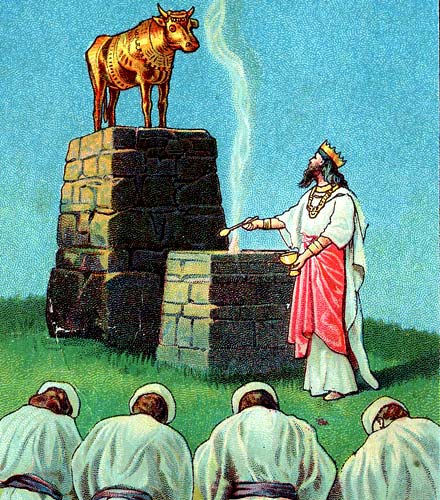 " And Samuel said, 'Has the LORD as great a delight in burnt offerings and sacrifices, as in obeying the voice of the LORD? Behold, to obey is better than sacrifice, and to listen than the fat of rams. For rebellion is as the sin of divination, and presumption is as iniquity and idolatry. Because you have rejected the word of the LORD, he has also rejected you from being king'" (1 Sam. 15:22-23).
The LORD had given Saul that task of eliminating the Amalekites and devoting all of their things to destruction. However, Saul has spared their king, Agag, and the choice animals. When Saul sees Samuel coming, He reports to Samuel that he has obeyed the the LORD. However, Samuel calls his bluff and asks why there is the bleating and lowing of animals in the camp. Saul makes it seem like they were going to sacrifice the animals to honor the LORD. But Samuel, under the leadership of the Spirit, refuses to listen.
Samuel asks, "Has the LORD as great a delight in burnt offerings and sacrifices, as in obeying the voice of the LORD?" The obvious answer is no. The Lord takes no delight in a sacrifice offered insincerely or as a bribe. When we give in order to appease our guilt for willfully sinning against the Lord, that is the same as trying to bribe God. Saul, in essence, was saying that he didn't have to obey God as long as he was willing to "pay off" his debt.
But Samuel says that won't work. He says, "Behold, to obey is better than sacrifice, and to listen than the fat of rams. For rebellion is as the sin of divination, and presumption is as iniquity and idolatry" (1 Sam. 15:22b-23a). Rebellion against the Word of the Lord (willful disobedience) is as the sin of divination, because it seeks to predict the future response of God. It denies God's trustworthiness, because it assumes that he will not act in the way in which he says he will. Presumption is like idolatry, because it is based on a faulty understanding of God. It assumes that God will be satisfied with our offer.
 |
| Photo by Andreas F. Borchert |
Through faith in Christ, by the power of the Holy Spirit, we are able to walk in obedience. Although we may stumble often, we confess and keep moving forward in faith. We must seek to rid our hearts of idols and idolatrous understandings of God. He cannot be bought with our giving, but rather has bought us through his love. His holiness cannot turn a blind eye to our sin, but his mercy has applied Christ's righteousness to our lives.
Let us put away presumption and disobedience. Let us stop thinking that we are the exceptions to the rule. When we think and live in such a way, we demonstrate that we do not know God as we should. We demonstrate the nature of the idol (or idols) which we follow. As followers of Christ, we must be flee from idolatry. That doesn't mean we don't have contact with idolaters, because we would have seal ourselves off from the world. It does mean that we remove all idols from our lives. Anything we put before Jesus is an idol. As the apostle John states, "Little children, keep yourselves from idols" (1 John 5:21).
How do we keep ourselves from idols?
- We must recognize them for what they are.
- We must reject their presence in our lives.
- We must confess our sins to the Lord.
- We must remember that we have been forgiven and cleansed because of the completed work of Christ.
- We must move forward in faith.
Wednesday, February 24, 2010
Finding the Blessed Life
"Blessed are those whose way is blameless, who walk in the law of the LORD! Blessed are those who keep his testimonies, who seek him with their whole heart, who also do no wrong, but walk in his ways!" (Ps. 119:1-3).
I think we all want a "blessed" life. However, I am not certain we would define "blessed" in quite the same terms that we see in Scriptures. Nor do I believe we understand how one enters into the blessed life in quite the same way the Bible explains it. We think of the blessed life in terms of health, wealth, success, and fame. The Bible presents the blessed life as a life that receives God's approval. We think people enter a blessed life by chance (luck), or by birth (inheritance), or by good works.
Psalm 119:1-3 could be taken in such a way that it would appear that blessing comes by hard work, but that would be a misunderstanding. The Psalmist isn't encouraging us to pull ourselves up by our spiritual bootstraps in order that we may be blessed by God. He is demonstrating the kind of people God's blessing rests upon. Those who "walk in the law of the LORD" are blessed. Those "who keep his testimonies" experience blessing because they trust him.
It is impossible to walk in the law or to keep the LORD's testimonies without trusting in the Lord. If we do not have the Holy Spirit indwelling us, it is humanly impossible to do God's will. However, when we trust in Christ, the Holy Spirit comes and dwells in us. The Spirit's presence enables us to do what the Lord requires. He creates in us a desire for and a delight in the Word of God. As we respond to the Spirit's leading, we find ourselves walking the ways of the Lord. As we walk in the ways of the Lord, his good pleasure shines upon us and we are happy in him. To be happy in the Lord and to be in his good pleasure is to be blessed.
Therefore, if we are to enjoy God's blessing, then we must walk according to his word. More than this, we must pursue the ways of the Lord with wholehearted devotion. If we will do this, the Lord promises that we will be blessed. Are you pursuing the Lord with wholehearted devotion? Are you walking in accordance with his Word? If you are not, then you will not experience the blessing of the Lord.
I think we all want a "blessed" life. However, I am not certain we would define "blessed" in quite the same terms that we see in Scriptures. Nor do I believe we understand how one enters into the blessed life in quite the same way the Bible explains it. We think of the blessed life in terms of health, wealth, success, and fame. The Bible presents the blessed life as a life that receives God's approval. We think people enter a blessed life by chance (luck), or by birth (inheritance), or by good works.
Psalm 119:1-3 could be taken in such a way that it would appear that blessing comes by hard work, but that would be a misunderstanding. The Psalmist isn't encouraging us to pull ourselves up by our spiritual bootstraps in order that we may be blessed by God. He is demonstrating the kind of people God's blessing rests upon. Those who "walk in the law of the LORD" are blessed. Those "who keep his testimonies" experience blessing because they trust him.
It is impossible to walk in the law or to keep the LORD's testimonies without trusting in the Lord. If we do not have the Holy Spirit indwelling us, it is humanly impossible to do God's will. However, when we trust in Christ, the Holy Spirit comes and dwells in us. The Spirit's presence enables us to do what the Lord requires. He creates in us a desire for and a delight in the Word of God. As we respond to the Spirit's leading, we find ourselves walking the ways of the Lord. As we walk in the ways of the Lord, his good pleasure shines upon us and we are happy in him. To be happy in the Lord and to be in his good pleasure is to be blessed.
Therefore, if we are to enjoy God's blessing, then we must walk according to his word. More than this, we must pursue the ways of the Lord with wholehearted devotion. If we will do this, the Lord promises that we will be blessed. Are you pursuing the Lord with wholehearted devotion? Are you walking in accordance with his Word? If you are not, then you will not experience the blessing of the Lord.
Subscribe to:
Comments (Atom)