"But David said to Abishai, 'Do not destroy him, for who can put out his hand against the LORD's anointed and be guiltless'" (1 Sam. 26:9).
1 Samuel 26:1-25 relates another instance where Saul is pursuing David to kill him. Again the Lord give Saul into David's hand, and David is able to sneak up to where Saul his sleeping and take his spear and water jar. In fact, the whole camp of some 3000 soldiers were brought under a deep slumber from the Lord. Abishai, one of David's warriors, recognizes David's apprehension and offer to eliminate Saul. Yet, David cannot even allow a friend to raise a hand to the anointed of the Lord.
Saul's and David's anointing marked them out as God's appointed servant for a particular task (king), for a particular time. They were both anointed with oil, and empowered with the Spirit for their task. I am persuaded that Saul was chosen first to punish the people for rejecting their rightful king, God. Saul is a king like all the other nations had. His was the only agenda that mattered.
David knew that the kingdom had been taken away from Saul by God, because he too had been anointed by Samuel. Yet, David seems to have understood the anointing as something that could not be taken fully away. The anointing that set Saul apart, continued to rest upon him, even after the kingdom had been taken from him.
David esteemed the anointed, because he esteemed the one who anointed him. It appears that David saw Saul as marked by the Lord, and took that to mean that an attack on Saul was an attack on the Lord. David could not raise his hand against Saul, without striking out at the Lord. This he could not even imagine. Nor could he associate (or let live) anyone who would dare such a feat.
David's attitude seems to anticipate "The Anointed." All of the other anointings that occur throughout Israel's history (of prophets, priests, and kings) point to the coming of one who will not only be anointed, but who will be the Anointed, that is the Messiah or the Christ.
Do we esteem the Anointed so highly, that we cannot bring ourselves to think evil of his "little anointeds"? As those who profess to follow Christ are we vehemently opposed to harming other Christians (little Christs). I am not saying we cannot point our error that is occurring in the name of Jesus. David points out Saul's errors, but he cannot bring himself to harm him. The mark of God's favor still lingers on him, so David will do him no harm.
How much do we esteem Christ? Do we serve everyone with understanding that they bear the mark of his favor? Do we labor to protect the "Lord's anointed" from exploitation? Are we terrified that we might diminish the glory of the Lord or cause his named to be blasphemed by our lax and careless ways? Do we honor those who labor under the authority of the Word and seek to protect them? Do we labor diligently to ensure we are not swept away by some wind of false doctrine?
How we approach the problems in our lives speaks volumes about what truly think about the Lord's anointed. Do you feel compelled to take matters into your own hands? That attitude suggests that you don't trust the Lord to get it done. Are you angry when God blesses sinners? That attitude suggests that you don't understand the grace that has been given to you. Friends, esteem Christ and seek the good of his people.
Showing posts with label Saul. Show all posts
Showing posts with label Saul. Show all posts
Thursday, May 20, 2010


Friday, May 14, 2010
Keep Yourselves from Idols
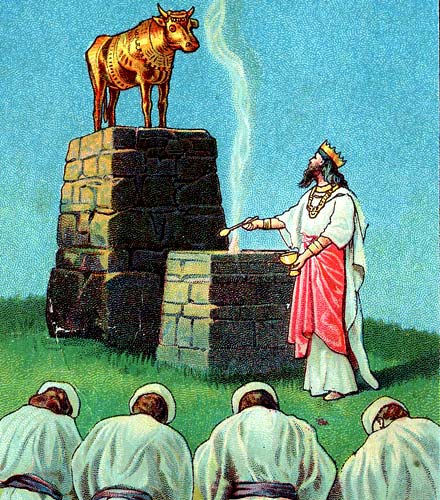 " And Samuel said, 'Has the LORD as great a delight in burnt offerings and sacrifices, as in obeying the voice of the LORD? Behold, to obey is better than sacrifice, and to listen than the fat of rams. For rebellion is as the sin of divination, and presumption is as iniquity and idolatry. Because you have rejected the word of the LORD, he has also rejected you from being king'" (1 Sam. 15:22-23).
The LORD had given Saul that task of eliminating the Amalekites and devoting all of their things to destruction. However, Saul has spared their king, Agag, and the choice animals. When Saul sees Samuel coming, He reports to Samuel that he has obeyed the the LORD. However, Samuel calls his bluff and asks why there is the bleating and lowing of animals in the camp. Saul makes it seem like they were going to sacrifice the animals to honor the LORD. But Samuel, under the leadership of the Spirit, refuses to listen.
Samuel asks, "Has the LORD as great a delight in burnt offerings and sacrifices, as in obeying the voice of the LORD?" The obvious answer is no. The Lord takes no delight in a sacrifice offered insincerely or as a bribe. When we give in order to appease our guilt for willfully sinning against the Lord, that is the same as trying to bribe God. Saul, in essence, was saying that he didn't have to obey God as long as he was willing to "pay off" his debt.
But Samuel says that won't work. He says, "Behold, to obey is better than sacrifice, and to listen than the fat of rams. For rebellion is as the sin of divination, and presumption is as iniquity and idolatry" (1 Sam. 15:22b-23a). Rebellion against the Word of the Lord (willful disobedience) is as the sin of divination, because it seeks to predict the future response of God. It denies God's trustworthiness, because it assumes that he will not act in the way in which he says he will. Presumption is like idolatry, because it is based on a faulty understanding of God. It assumes that God will be satisfied with our offer.
 |
| Photo by Andreas F. Borchert |
Through faith in Christ, by the power of the Holy Spirit, we are able to walk in obedience. Although we may stumble often, we confess and keep moving forward in faith. We must seek to rid our hearts of idols and idolatrous understandings of God. He cannot be bought with our giving, but rather has bought us through his love. His holiness cannot turn a blind eye to our sin, but his mercy has applied Christ's righteousness to our lives.
Let us put away presumption and disobedience. Let us stop thinking that we are the exceptions to the rule. When we think and live in such a way, we demonstrate that we do not know God as we should. We demonstrate the nature of the idol (or idols) which we follow. As followers of Christ, we must be flee from idolatry. That doesn't mean we don't have contact with idolaters, because we would have seal ourselves off from the world. It does mean that we remove all idols from our lives. Anything we put before Jesus is an idol. As the apostle John states, "Little children, keep yourselves from idols" (1 John 5:21).
How do we keep ourselves from idols?
- We must recognize them for what they are.
- We must reject their presence in our lives.
- We must confess our sins to the Lord.
- We must remember that we have been forgiven and cleansed because of the completed work of Christ.
- We must move forward in faith.
Subscribe to:
Posts (Atom)